How to Work as an Online Freelancer in 2026
What it means to be an online freelancer today
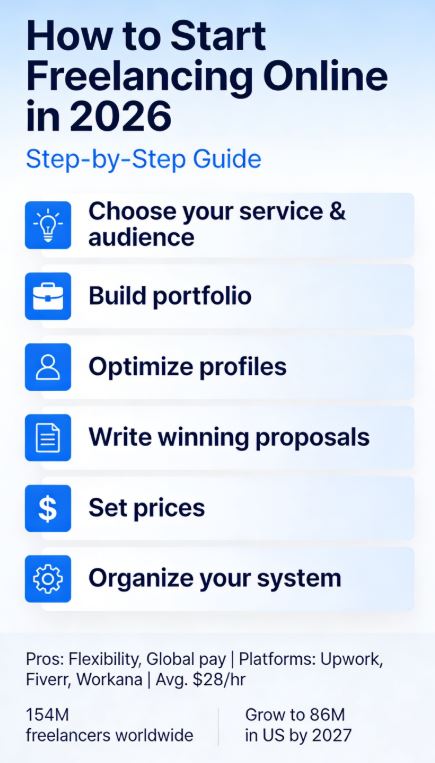
Being an online freelancer means offering professional services on your own to clients, usually per project or service packages, without a traditional employment relationship. You can work remotely for companies in any country, set your own rates, choose projects, and manage your own schedule and client portfolio. In Europe, around 25% of digital professionals already work independently, and the trend keeps growing.
Most in-demand freelance professions
Some of the most in-demand areas in 2026 are:
-
Web / app development and programming (including automation and QA)
-
Digital marketing: SEO, ads, social media, email marketing, funnels
-
Graphic design and UX/UI for websites, apps and products
-
Writing, copywriting, translation, video editing and multimedia content
-
Administrative support, finance, data entry, BI and data analysis
Average global pay is around 28 dollars per hour, but highly specialized profiles earn significantly more.
Why freelancing is growing so fast
The combination of remote work, global project platforms and a shift in work mindset has massively increased the number of freelancers. Between 154 and 435 million people already work through gig economy platforms, and freelancers are expected to form the majority of the workforce in the US by 2027. The main motivations are independence, flexibility and the ability to choose clients and projects.
Pros and cons
Main advantages:
-
Full control over schedule and location (you only need a good computer and Internet).
-
Ability to get paid in strong currencies like dollars or euros while working from anywhere.
-
Scalability: you can raise your rates, package your services and outsource work.
Main disadvantages:
-
Variable income and the need to manage financial instability.
-
You are responsible for invoicing, taxes and constantly finding clients.
-
Higher responsibility for organization, negotiation and delivering results.
Best platforms to find freelance work
In 2026 there are many platforms where you can find clients without needing previous contacts.
| Platform | Main types of work | Key strength |
|---|---|---|
| Upwork | Development, marketing, design, remote support | Large volume of global projects, strong currencies |
| Freelancer.com | Almost all categories | Huge supply and demand, wide budget range |
| Fiverr | Creative work, marketing, content, video | You sell “gigs”, clients buy predefined packages |
| Workana | Spanish and LATAM markets | Ideal if you speak Spanish/Portuguese |
| Guru | Experienced profiles, multiple categories | Lower fees and built‑in project management |
You also have remote job boards that list 100% online roles you can perform as a freelancer while getting paid in foreign currencies.
How to start as a freelancer from scratch (step by step)
Most recent guides agree that freelance success depends on clarity in your offer, visibility and daily discipline.
1. Decide what service you offer and to whom
First, define one main service and, at most, one complementary service.
Examples: “SEO content writing for tech blogs”, “Facebook Ads management for e‑commerce”, “WordPress website development for small businesses”. The clearer you are about what you do, for whom and what outcome you provide, the easier it is for clients to hire you.
2. Build a minimum viable portfolio
You don’t need dozens of projects; 3–6 solid samples are enough.
You can use:
-
Personal projects (e.g., a demo website or a sample blog)
-
Volunteer work or collaborations
-
Simulated case studies with clearly explained hypothetical results
What matters is showing your process, before/after, and how you help clients.
3. Optimize your profile on platforms
On platforms like Upwork, Freelancer, Fiverr or Workana, a strong profile makes a big difference.
Key tips:
-
Professional photo, real name and a clear, benefit-driven bio
-
Headline including your specialty and outcome (“SEO Specialist helping blogs grow traffic”)
-
Relevant keywords so you show up in internal searches
Some platforms even recommend using specific terms like “remote web development 2026” in your profile to stand out.
4. Learn to write proposals that convert
One of the biggest complaints from beginners is getting no replies, but the real problem is usually the proposal.
Best practices:
-
Always personalize, mentioning the project and the client’s business
-
Be brief and outcome-focused (what you will do and what the client gets)
-
Add 1–2 portfolio pieces directly relevant to the project
-
Close with a clear question to start a conversation
A good habit is to spend at least 30 minutes per day sending targeted proposals.
5. Set your prices and payment model
You can charge per hour, per fixed project or in monthly service packages.
Tips:
-
Research typical rates in your niche and adjust for your experience level
-
Start a bit lower to get your first reviews, but set a minimum that is sustainable
-
Use each platform’s escrow and protected payment systems to avoid issues
As you collect positive reviews and success stories, you can raise your rates consistently.
6. Organize your workflow and invoicing system
Freelancing means setting up a small personal “business system”: project management, invoices, contracts and routines. A minimal digital setup usually includes a project management tool, an invoicing system and clear communication rules for clients. Defining working hours, boundaries and standard processes early on helps you avoid burnout and keep your business sustainable.
Strategies to get more and better clients
Beyond platforms, top‑earning freelancers usually combine several client acquisition channels:
-
Networking on LinkedIn and niche communities
-
Creating content that showcases your expertise (articles, threads, newsletters, short videos)
-
Asking happy clients for referrals and offering referral incentives
-
Having a simple “service landing page” that presents what you do and your best case studies
A daily prospecting routine (platforms + direct outreach) is one of the strongest predictors of stable freelance income.
The present and future of freelance work
Data for 2026 shows that online freelancing is not a passing trend, but a structural part of the global labor market. Between 154 and 435 million people already work through gig economy platforms, and in the US alone more than 86 million people are expected to be freelancers by 2027. With companies increasingly open to remote work and independent talent, those who position themselves well now can build highly profitable and flexible careers in the coming years.
Best Practices for Building an Email List